
Luke 7:36-50 The Sinful Woman and Simon the Pharisee

He who has been forgiven much loves much, he who has been forgiven little loves little. Jesus contrasts the Pharisee and the Sinful Woman to teach a valuable lesson about grace: don't skip out on deeply evaluating sin before grasping for forgiveness. 

Luke 7:36-50 He Who Is Forgiven Much Loves Much
Edward Anton
The Forgiven Women
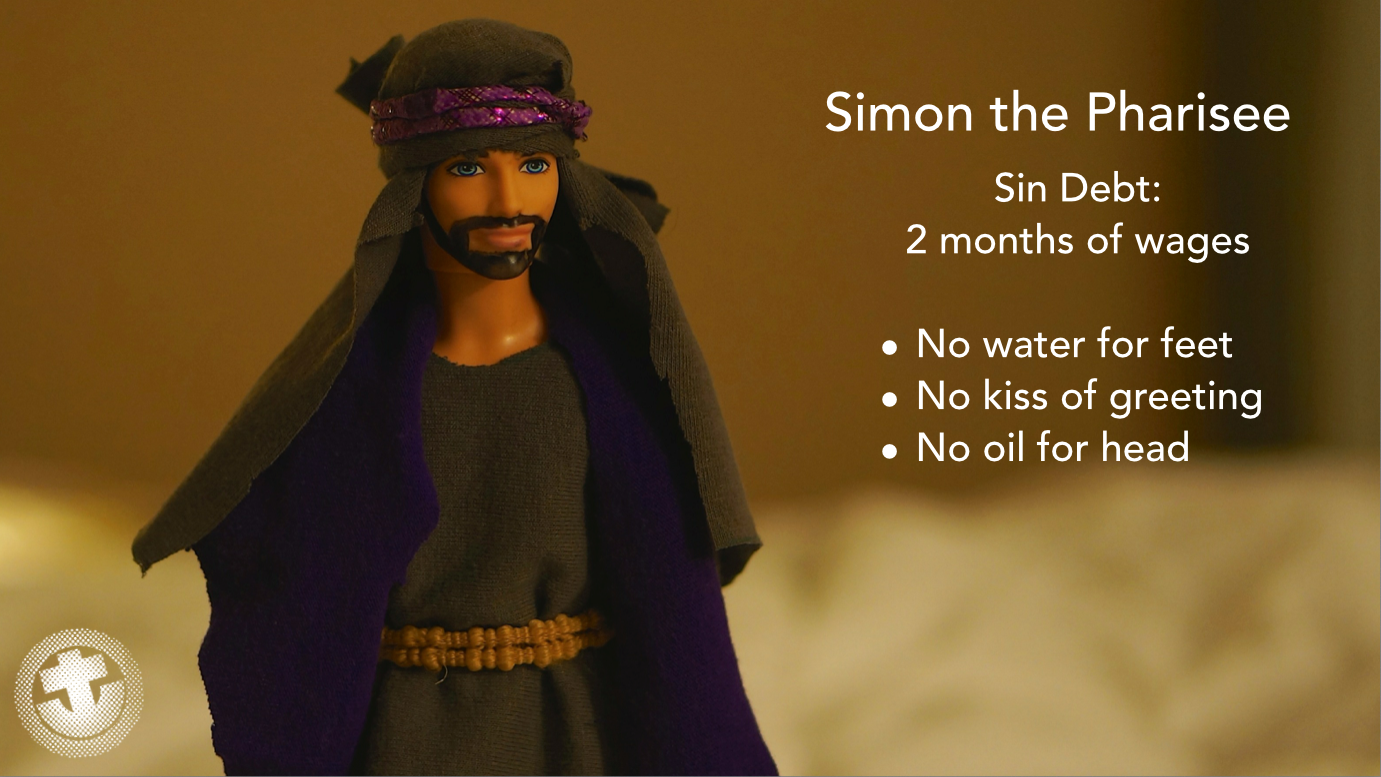
Simon the Pharisee

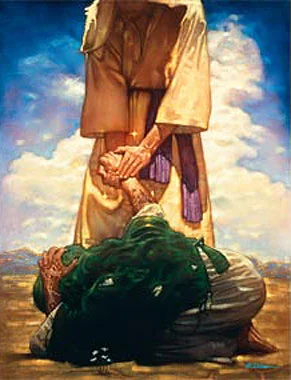
When one of the Pharisees invited Jesus to have dinner with him, he went to the Pharisee’s house and reclined at the table. A woman in that town who lived a sinful life learned that Jesus was eating at the Pharisee’s house, so she came there with an alabaster jar of perfume. As she stood behind him at his feet weeping, she began to wet his feet with her tears. Then she wiped them with her hair, kissed them and poured perfume on them. When the Pharisee who had invited him saw this, he said to himself, “If this man were a prophet, he would know who is touching him and what kind of woman she is—that she is a sinner.” Jesus answered him, “Simon, I have something to tell you.” “Tell me, teacher,” he said. “Two people owed money to a certain moneylender. One owed him five hundred denarii, and the other fifty. Neither of them had the money to pay him back, so he forgave the debts of both. Now which of them will love him more?” Simon replied, “I suppose the one who had the bigger debt forgiven.” “You have judged correctly,” Jesus said. Then he turned toward the woman and said to Simon, “Do you see this woman? I came into your house. You did not give me any water for my feet, but she wet my feet with her tears and wiped them with her hair. You did not give me a kiss, but this woman, from the time I entered, has not stopped kissing my feet. You did not put oil on my head, but she has poured perfume on my feet. Therefore, I tell you, her many sins have been forgiven—as her great love has shown. But whoever has been forgiven little loves little.” Then Jesus said to her, “Your sins are forgiven.” The other guests began to say among themselves, “Who is this who even forgives sins?” Jesus said to the woman, “Your faith has saved you; go in peace.”” (Luke 7:36–50, NIV)
Guest User Comment
Luke 7:17-35 Jesus and John the Baptist

Jesus leverages his assurances to John the Baptist to describe what he considers to be greatness. It's NOT the vacillators who play to the crowds; it's not the satin clad sycophants who cower from speaking truth to power; it's not the fickle entitled consumers shopping for self fulfillment. Instead, it's a prophet. And even GREATER... John the Baptist. And even GREATER than John the Baptist … all who have been translated into the Kingdom. Thus, YOU are greater than John the Baptist, and YOU are greater than all the prophets. 

Edward Anton Luke 7:17-36 Sermon on Jesus and John the Baptist and YOU

This news about Jesus spread throughout Judea and the surrounding country. John’s disciples told him about all these things. Calling two of them, he sent them to the Lord to ask, “Are you the one who is to come, or should we expect someone else?” When the men came to Jesus, they said, “John the Baptist sent us to you to ask, ‘Are you the one who is to come, or should we expect someone else?’ ” At that very time Jesus cured many who had diseases, sicknesses and evil spirits, and gave sight to many who were blind. So he replied to the messengers, “Go back and report to John what you have seen and heard: The blind receive sight, the lame walk, those who have leprosy are cleansed, the deaf hear, the dead are raised, and the good news is proclaimed to the poor. Blessed is anyone who does not stumble on account of me.” After John’s messengers left, Jesus began to speak to the crowd about John: “What did you go out into the wilderness to see? A reed swayed by the wind? If not, what did you go out to see? A man dressed in fine clothes? No, those who wear expensive clothes and indulge in luxury are in palaces. But what did you go out to see? A prophet? Yes, I tell you, and more than a prophet. This is the one about whom it is written: “ ‘I will send my messenger ahead of you, who will prepare your way before you.’ I tell you, among those born of women there is no one greater than John; yet the one who is least in the kingdom of God is greater than he.” (All the people, even the tax collectors, when they heard Jesus’ words, acknowledged that God’s way was right, because they had been baptized by John. But the Pharisees and the experts in the law rejected God’s purpose for themselves, because they had not been baptized by John.) Jesus went on to say, “To what, then, can I compare the people of this generation? What are they like? They are like children sitting in the marketplace and calling out to each other: “ ‘We played the pipe for you, and you did not dance; we sang a dirge, and you did not cry.’ For John the Baptist came neither eating bread nor drinking wine, and you say, ‘He has a demon.’ The Son of Man came eating and drinking, and you say, ‘Here is a glutton and a drunkard, a friend of tax collectors and sinners.’ But wisdom is proved right by all her children.” (Luke 7:17–35, NIV)

Guest UserComment
Luke 7:1-10 A Centurion's Faith

Jesus encounters a Gentile Centurion of worthy faith. This faith takes Jesus at His Word and provides an upward call for all who profess faith in Jesus today.

Luke 7:1-10 A Centurion's Worthy Faith
Edward Anton

When Jesus had finished saying all this to the people who were listening, he entered Capernaum. There a centurion’s servant, whom his master valued highly, was sick and about to die. The centurion heard of Jesus and sent some elders of the Jews to him, asking him to come and heal his servant. When they came to Jesus, they pleaded earnestly with him, “This man deserves to have you do this, because he loves our nation and has built our synagogue.” So Jesus went with them. He was not far from the house when the centurion sent friends to say to him: “Lord, don’t trouble yourself, for I do not deserve to have you come under my roof. That is why I did not even consider myself worthy to come to you. But say the word, and my servant will be healed. For I myself am a man under authority, with soldiers under me. I tell this one, ‘Go,’ and he goes; and that one, ‘Come,’ and he comes. I say to my servant, ‘Do this,’ and he does it.” When Jesus heard this, he was amazed at him, and turning to the crowd following him, he said, “I tell you, I have not found such great faith even in Israel.” Then the men who had been sent returned to the house and found the servant well. (Luke 7:1–10, NIV)

Luke 6:27-36 Love For Enemies

Jesus turns the world's values upside down and inside out with this call to love even your enemies. Love — Agape — is not the sentimental, emotional, romantic, familial love. Instead it is a love forged in the will of every Christian (because Christ first loved us). It is a love of selfless, active, service. Some fear this love, thinking it will make one a doormat. To the contrary, this is a courageous love that is:

  • Active
  • Not Passive
  • Fully Christian

“But to you who are listening I say: Love your enemies, do good to those who hate you, bless those who curse you, pray for those who mistreat you. If someone slaps you on one cheek, turn to them the other also. If someone takes your coat, do not withhold your shirt from them. Give to everyone who asks you, and if anyone takes what belongs to you, do not demand it back. Do to others as you would have them do to you. “If you love those who love you, what credit is that to you? Even sinners love those who love them. And if you do good to those who are good to you, what credit is that to you? Even sinners do that. And if you lend to those from whom you expect repayment, what credit is that to you? Even sinners lend to sinners, expecting to be repaid in full. But love your enemies, do good to them, and lend to them without expecting to get anything back. Then your reward will be great, and you will be children of the Most High, because he is kind to the ungrateful and wicked. Be merciful, just as your Father is merciful.” (Luke 6:27–36, NIV)

Edward Anton Luke 6:27-36 Love Even Your Enemies
Guest UserComment
Luke 6:17-26 Jesus Introduces Kingdom Values

In this Sunday sermon, Ed Anton lays out an introduction to Jesus' "Sermon on the Plateau" with the setting and content of the four blessings and woes. Jesus unfurls the upside down values of His Kingdom with blessings and woes pronounced to both His disciples and the crowd.

  • We All Will Receive Blessings - Where Do You Want Yours Delivered?
  • We Are All Prophets - What Kind Are You?

Jesus concludes with a charge to be a true rather than false prophet; a prophet who will be honored/blessed when His kingdom comes into full view.

He went down with them and stood on a level place. A large crowd of his disciples was there and a great number of people from all over Judea, from Jerusalem, and from the coastal region around Tyre and Sidon, who had come to hear him and to be healed of their diseases. Those troubled by impure spirits were cured, and the people all tried to touch him, because power was coming from him and healing them all. Looking at his disciples, he said: “Blessed are you who are poor, for yours is the kingdom of God. Blessed are you who hunger now, for you will be satisfied. Blessed are you who weep now, for you will laugh. Blessed are you when people hate you, when they exclude you and insult you and reject your name as evil, because of the Son of Man. “Rejoice in that day and leap for joy, because great is your reward in heaven. For that is how their ancestors treated the prophets. “But woe to you who are rich, for you have already received your comfort. Woe to you who are well fed now, for you will go hungry. Woe to you who laugh now, for you will mourn and weep. Woe to you when everyone speaks well of you, for that is how their ancestors treated the false prophets.” (Luke 6:17–26, NIV)

Edward Anton Luke 6:17-26 Jesus Introduces Kingdom Values
Guest UserComment
Luke 6:1-11 Sermon by Cody Dowdy

Jesus tests the hearts of hearers by healing on the Sabbath.

Cody Dowdy Luke 6:1-11 Sermon
Guest UserComment
Luke 5:27-32 The Calling of Levi
jesus_is_invited_to_levis_banquet.jpg

Despite social taboos, Levi humbly accepts Jesus call to drop everything and follow him. Upon doing so he throws a banquet for the despised of the community. The two receive self-righteous backlash until Jesus reveals the true issue at heart: If you do not think you're sick you will not see a need for Him. 

Shaun McDonnell: Luke 5:27-32 The Calling of Levi
Guest UserComment
Luke 5:17-24 Whatever It Takes To Get You to Jesus

Four faithful men are undeterred by the throngs of disputing and deliberating Pharisees (introduced here in Luke's Gospel) who block their way to Jesus. They make every effort to get a paralyzed friend in front of Jesus. And it's a good thing. Jesus both heals the man and forgives his sins! And the bed that once carried the man is the bed that he can now carry. Make every effort to get to Jesus, the Son of Man, for full deliverance.

healing_of_paralytic_610x300.jpg
Edward Anton Luke 5:17-24 Whatever It Takes to Get You to Jesus
Guest UserComment
Luke 5:12-16 There's No Stain or Shame Beyond Jesus' Cleansing Touch
RonDiCianni-TheLeper.jpg

Jesus changes the trajectory of this leper's life as he tenderly touches him, cleanses him, and restores him to his relationships. This is a powerful picture of Jesus and a powerful reminder of our cleansing by Him. 

Edward Anton Luke 5:12-16 There's No Stain or Shame Beyond Jesus' Cleansing Touch
Guest UserComment
Luke 4:14-30 Familiar or Faithful?

Jesus begins his public ministry in his hometown of Nazareth but instead of being a good ol' hometown hero, he challenges his listeners to the very core by examining and fulfilling a scripture near and dear to their hearts, ultimately asking "Are you familiar or faithful?"

1977 Jesus of Naz synagogue.jpg
Matt Fisk Familiar or Faithful? (Luke 4.14-30)
Guest UserComment